 Home
Home Decode
 Tech
Tech Tools
Tools Dale's Coins/CDs
 Contact
 Chevelle
of the Month
Chevelle
of the Month Things
For Sale
Things
For Sale Custom
Stickers
Custom
Stickers
 Chevelle Rear End |
El Camino Rear End
Chevelle Rear End |
El Camino Rear End
Generic Rear Axle Information
12 bolt
| GM Part #/Teeth Individual Part #s |
Ratio Ring/Pinion |
Fits |
| 3961404 (39/8T) (3862528/3862516) |
4.88:1 - 39/8 | 65-69 All |
| 3961405 (43/13T) (3862689/3862693) |
3.31:1 - 43/13 | 65-70 All, 71 Chevelle/Nova, 72 Chevelle |
| 3961406 (39/11T) (3853010/3853008) |
3.55:1 - 39/11 | 65-69 Pass, 66-68 Chevy, Chevelle, Camaro, 69 Chevelle, 70 All |
| 3961407 (43/14T) (3863691/3853003) |
3.07:1 - 43/14 | 65-70 All and 71 Nova |
| 3961408 (41/11T) (3862525/3862513) |
3.73:1 - 41/11 | 65-69 All and 70 Camaro |
| 3961409 (41/10T) (3862526/3862514) |
4.10:1 - 41/10 | 65-69 All, 70 Chevelle, Camaro, 71 Malibu (Sport Coupe, Conv, El Camino [Custom] 8-cyl) |
| 3961410 (41/9T) (3862527/3862515) |
4.56:1 - 41/9 | 65-69 All |
| 3961434 (41/16T) (3871038/3871041) |
2.56:1 - 41/16 | 67 Chevelle w/A.I.R., 68-70 Chevelle, Camaro, 69 Chevy, 68-70 Pass |
| 3961435 (41/15T) (3869788/3869785) |
2.73:1 - 41/15 | 65-70 All, 71-72 Chevelle |
10 bolt
| GM Part Number | Ratio Ring/Pinion |
Fits |
| 3961412 (37/11T) (3880044/3790628) |
3.36:1 - 37/11 | 64-68 Chevy, Chevelle, 65-68 Pass, 69-70 All, 71-72 Chevelle, Nova |
| 3961413 (37/12T) (3880043/3790629) |
3.08:1 - 37/12 | 64-70 All, 71 All exc. Pass, 72 Chevelle |
| 3961414 (37/10T) (3880048/3849722) |
3.70:1 - 37/10 | 64-68 Chevelle, 65-68 Pass |
| 3961411 (39/11T) (3880046/3790627) |
3.55:1 - 39/11 | 64-69 All |
| 3961425 (41/15T) (3910818/3910823) |
2.73:1 - 41/15 | 67-70 Chevy, Chevelle, Camaro, 68-70 Pass, 71 Chevelle, Nova, 72 Chevelle |
| 3961426 (41/16T) (3917184/3917185) |
2.56:1 - 41/16 | 68-70 Chevy, Camaro, 69-71 Chevelle, 68-70 Pass, 71 Nova |
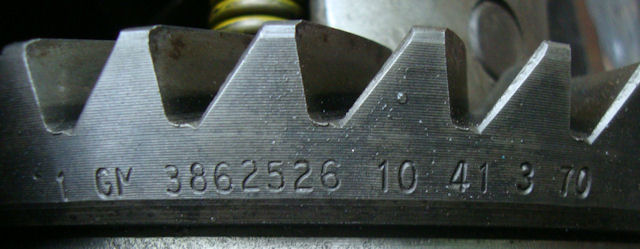
GM 4.10:1 ring gear
Stamped Axle Code Location
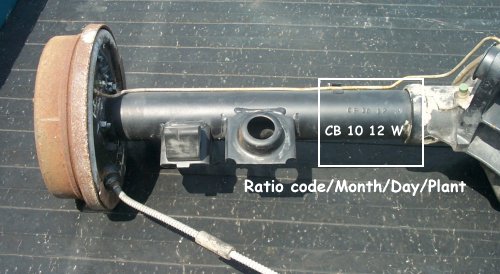
The gear ratio code, date, and rear axle assembly plant are generally
stamped into the right (passenger side) axle housing facing forward
and exact locations may vary slightly. This is an example from a 1967
Chevelle and is stamped CB 1012 W. The "CB" letters
are the original ID code for a 3.36:1 ratio, 1012 is the assembly date
of October 12, and the "W" indicates the plant code for Warren,
MI. This identification may not always be stamped clearly and the area
is often covered with years of road grime so it may take some scrubbing
to reveal it.
Individual gear ratio identification codes can be found for their respective years on this website.
From 1964 through 1970 the format for the rear axle information consisted of a 2-letter code for the ratio, a 4-digit number for the month/year, and a single letter for the rear axle assembly plant. If the rear end has an Eaton Positraction unit, there may also be a single letter "E" to note this. For example, a 1969 3.55:1 Positraction rear end may be stamped something like KF 0605K E (0605 is June 5) where a 1968 may be stamped something like CY 0824B for a 3.07:1 built at the Buffalo, NY plant on August 24.
In 1971 the format changed to a 3-letter prefix for the ratio and plant, a 3-digit number being the Julian date of the CALENDAR year the rear end was built and, depending on the plant and year, there may also be an addition "1" or "2" for the plant's work shift. For example an early 1971 model year rear end may be stamped something like CHC 327 2 for 2.73:1 Positraction built at the Buffalo, NY plant on the 327th day of 1970 (November 23) during that plant's second work shift. A 1971 rear end built after the first of the calendar year in 1971 would be something like CHC 064 2 for the same ratio but built on the 64th day of 1971 or March 5.
Casting Numbers
12-Bolt Housing: Casting
1965 Chevelle 3859140
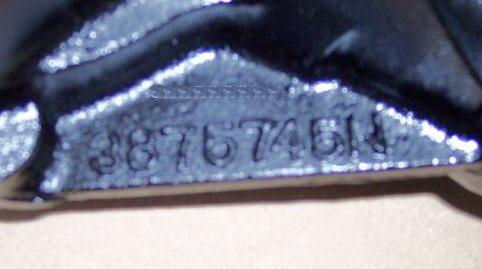
1966 Chevelle 3875745 ~
N3775745 ***
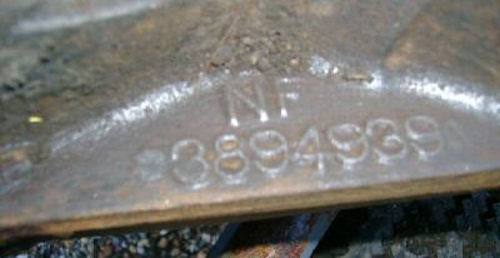
1967 Chevelle NF3894939 ~
N3894939 ~
N3775745 ***
1967 Chevelle-Late - 1969 3917124
1967 Chevelle-Late - 1969 NF3917124
1967 Chevelle-Late - 1969 3917124
1969 Chevelle 3959038
1969 Chevelle 3959038 **
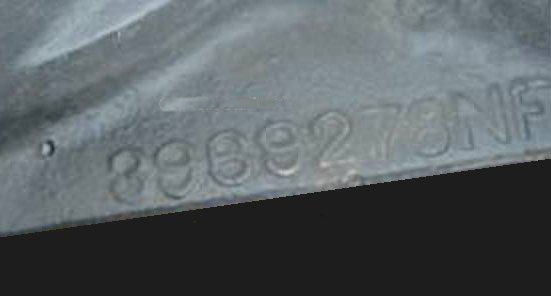
1970-72 Chevelle 3969278
1970-72 Chevelle 3969278
1970-72 Chevelle 3969278
10-Bolt Housing: Casting
1964 Chevelle 3839390
1965 Chevelle 3859139 *
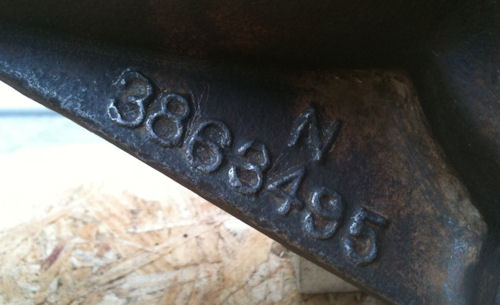
1965 Chevelle N3863495
1965 Chevelle 3863495
1966 Chevelle 3875744
1967 Chevelle 3894938
1968 Chevelle 3917123
1969 Chevelle 3917123
1970-72 Chevelle 3969277
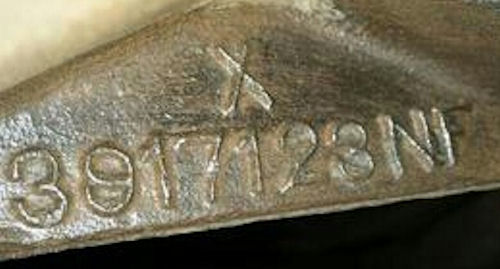
The casting numbers/letters on rear end housings may have either a prefix or suffix of "N" or "NF" and no reason has been found yet why they may have one or the other. The same has been found with the letter "X." But, here's my theory based on what I've seen. Feel free to comment on it. The "N" and "NF" is reportedly for the Neenah foundry located in Neenah, WI.
The model year 1967 is a transition year. Two rear end casting numbers
have been found on 12-bolt rear ends, #3894939 on 'early' models and
#3917124 on 'late' models; casting #3917124 was also used on 1968 and
early 1969 Chevelles but in the wider width.
* Reported on several 1965 Chevelles but no image of one yet.
See also 1965 Chevelle rear axle
information page.
** One example dated April 29, 1969 was found in a very early built
1970 Monte Carlo and stamped with CKD 0815B.
*** Rear ends with casting number 3775745 have been found on 1966 Chevelles
with casting date April 18, 1966 and 1967 Chevelles with stamped assembly
date of July 5.
12-Bolt Castings
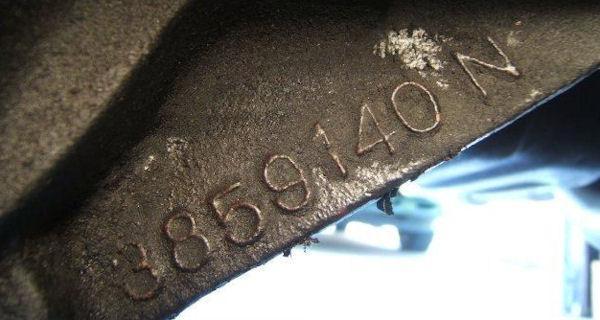
1965 casting number 3859140
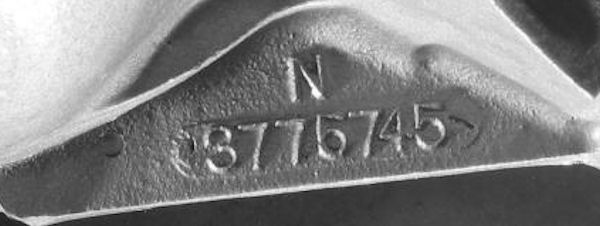
Possibly mis-cast 3875745 with casting date of April 16, 1966 found
in a 1966 Chevelle.
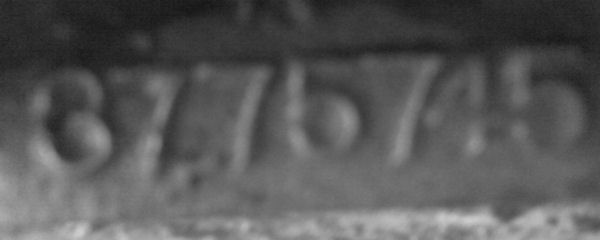
Another possibly mis-cast 3875745 found in a 1967 Chevelle.
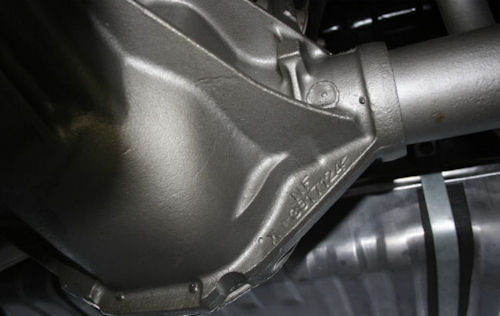
May 1968 NF X 3917124
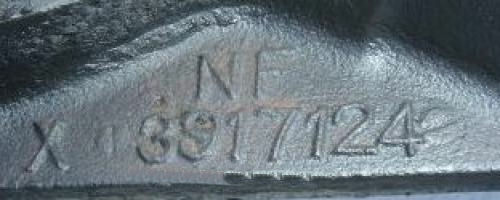
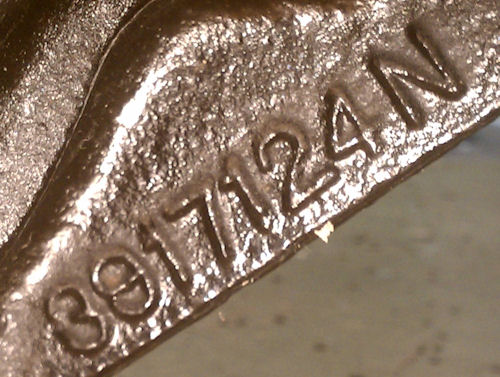
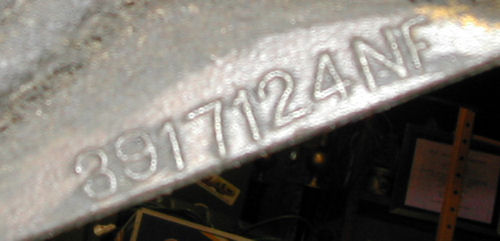
1967-1969 ~ Variations of casting number 3917124
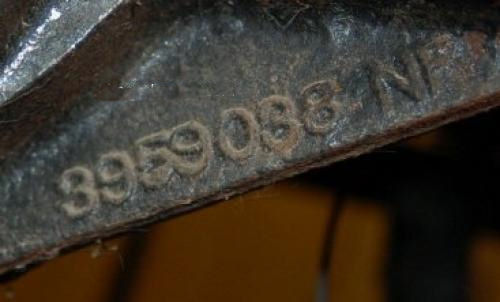
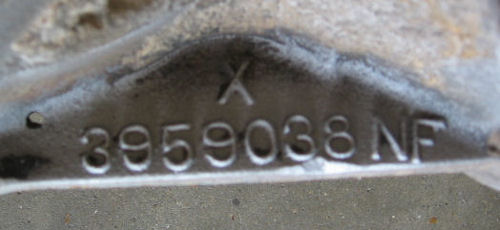
1969 ~ 3959038NF and X3959038NF
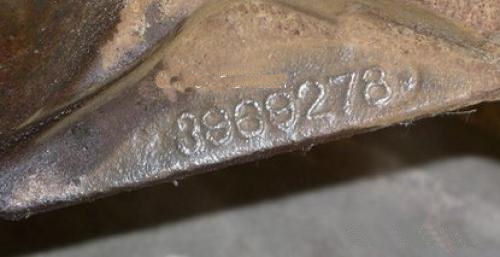
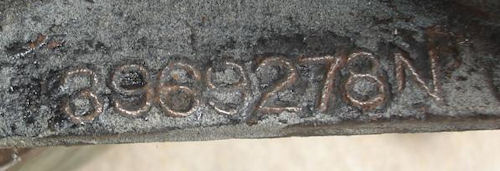
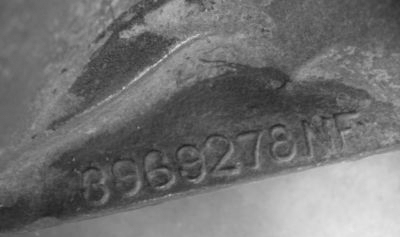
1970-1972 ~ 3969278, 3969378N, 3969278NF
10-Bolt Castings
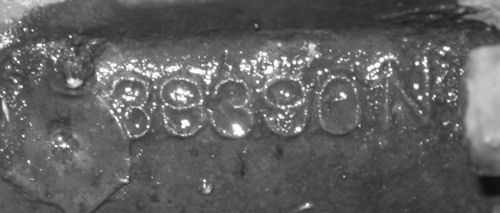
1964 ~ 3839390

1965 ~ 3963495N
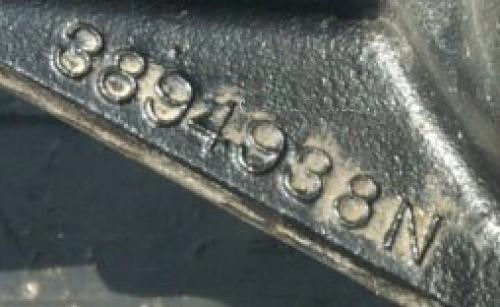
1967 - 3894938N
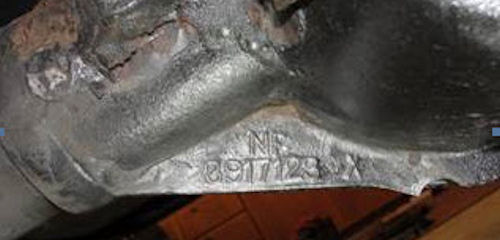
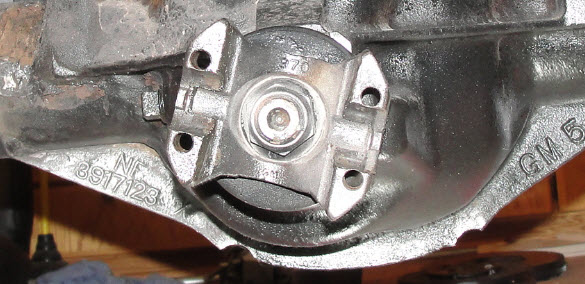
Two photos from different distances showing the location of the axle housing casting number NF 3917123 X. The GM 5 casting on the driver side is a mold casting identification and will, of course, vary from center section to center section.
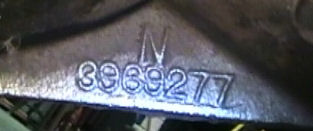
1970-1972 ~ N3969277
Anyone having photos of rear end casting numbers with "N" or "NF" or "X" in different from those above are encouraged to email me a photo of it. Please be specific about the year and, if possible, include a photo of the casting date. My email address is on my Contact page.
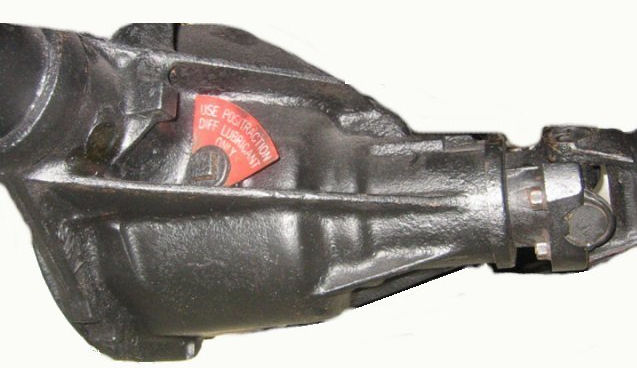
1969 and earlier Positraction labels are worded "USE POSITRACTION
DIFF. LUBRICANT ONLY."
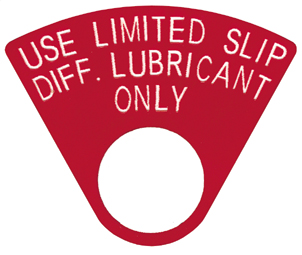
1970 and later Positraction labels are worded "USE LIMITED
SLIP DIFF. LUBRICANT ONLY."
Thanks to Dave Bates for his listing of casting numbers.
The date code on a rear end housing is simple to decode. It includes the month, day and year such as J257. This decodes to October 25, 1967. Month codes are A through L for January through December.
| A - January | B - February | C - March | D - April |
| E - May | F - June | G - July | H - August |
| I - September | J - October | K - November | L - December |
Recently I've been asked a couple of questions about, what appears
to be, McKinnon Industries-built (GM of Canada) rear ends that seem
to have odd - or non listed - ratio ID codes as far as Chevelles are
concerned.
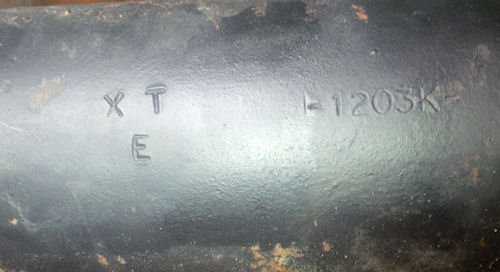
One is casting number 3969278 (1970-1972), dated F 20 9, and coded XT
0911K and another 3969278 coded LJ 1128K. Another two are casting number
3959038 (1969), no casting date as of yet, and coded LE 1115K and LE
0822K.
I cannot find information in either my U.S. or Canada parts & accessory
catalogs. Any help in identifying axle ratios for these two prefixes
or any other McKinnon Industries rear ends with other prefixes not listed
on this site would be welcomed. The XT, LE and LJ prefix codes to appear
for Pontiac 1970 GTO/GP for 3.07:1, 2.73:1 and 2.56:1 respectively. Although
no casting numbers are given, all of the codes (XT, LE and LJ) can be
found at
http://ronspontiacpage.com/reference-pages/rearendcodes.htm for
1970 model years and XT for 71 & 72 as well.
Casting Dates
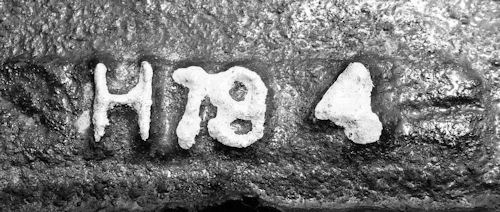
Casting date example of H 19 4 for August 19, 1964
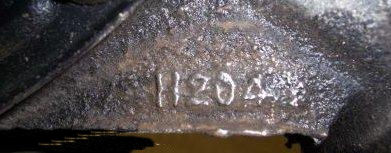
Casting date example of H 20 4 for August 20, 1964
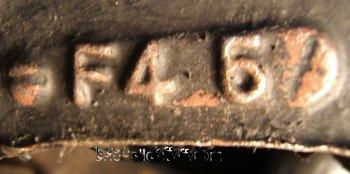
Casting date example of F 4 5 for June 4, 1965
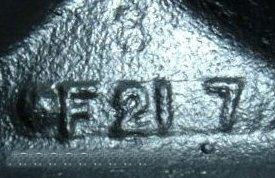
Casting date example of F 21 7 for June 21, 1967
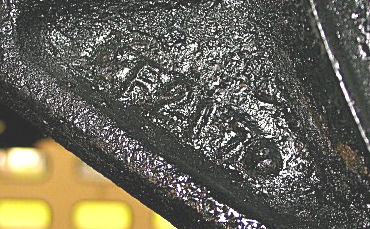
Another F 21 7 casting date - note these characters are not nicely aligned
as the example above.
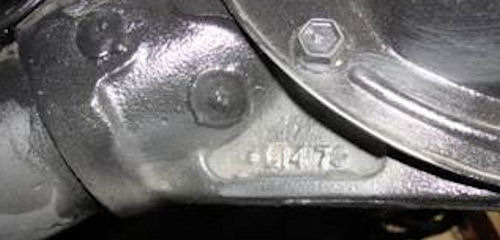
Casting date example of L 14 7 for December 14, 1967
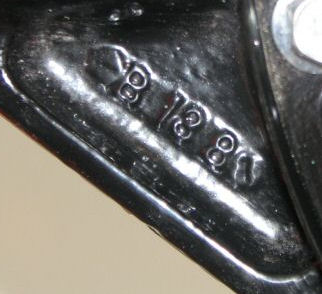
Casting date example of B 18 8 for February 18, 1968
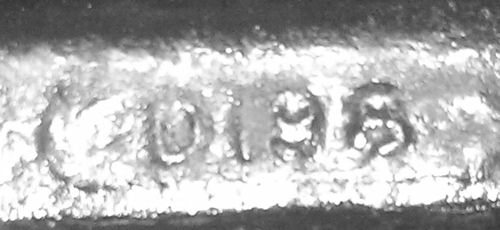
Casting date example of D 19 8 for April 19, 1968
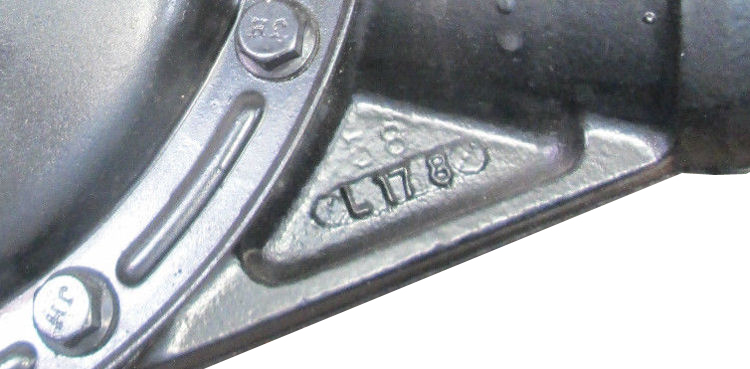
Casting date example of L 17 8 for December 17, 1968
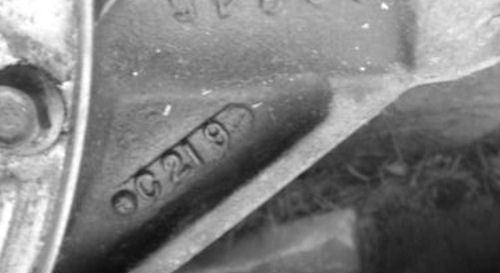
Casting date example of C 21 9 for March 21, 1969
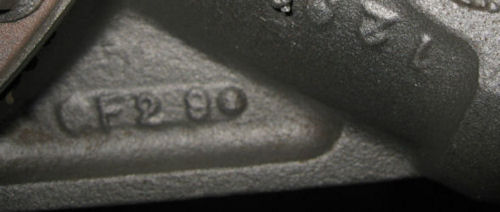
Casting date example of F 2 9 for June 2, 1969
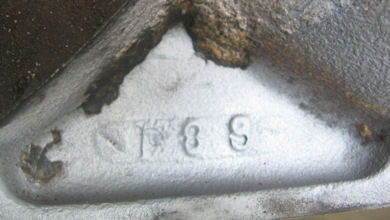
Casting date example of I 8 9 for September 8, 1969
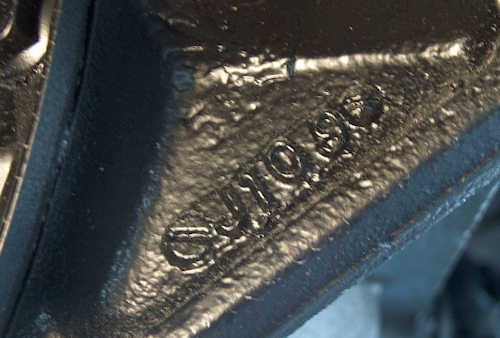
Casting date example of J 10 9 for October 10, 1969
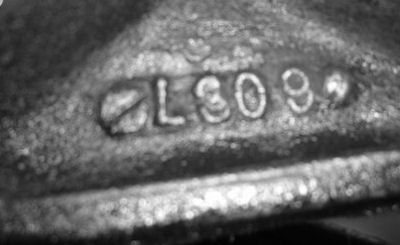
Casting date example of L 30 9 for December 30, 1969
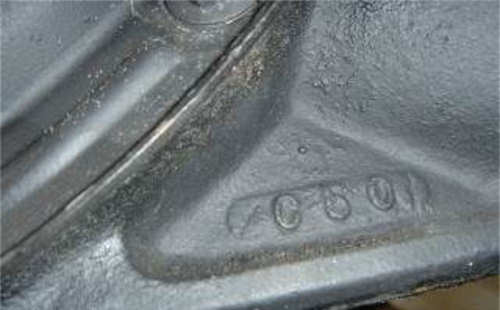
Casting date example of C 5 0 for March 5, 1970

Casting date example of E 8 0 for May 8, 1970
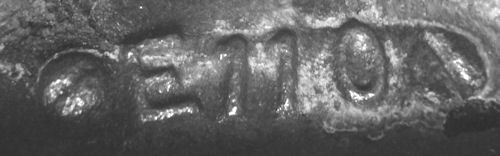
Casting date example of E 11 0 for May 11, 1970
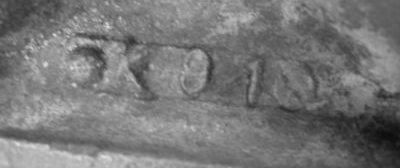
Casting date example K 9, 1 for November 9, 1971
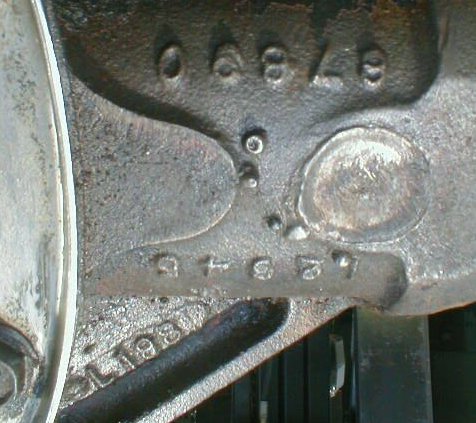
Foundry castings of 12345 67890 and rear casting date of L 19 8 for
December 19, 1968.
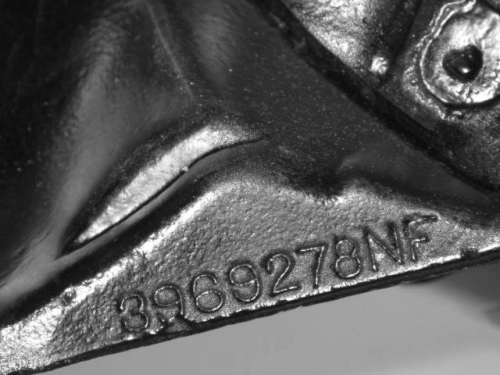
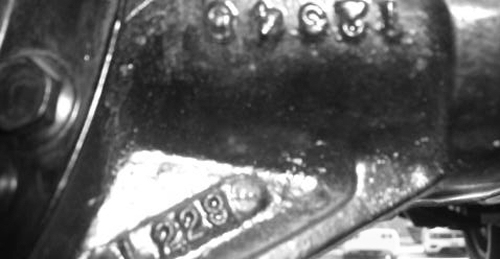
Often anomalies occur. The two photos below are from a 1970 Chevelle with the correct casting number, 3969278NF, but a casting date that appears to be December 22, 1968 (L 22 8). It has been suggested that possibly the casting date was set wrong and it should be L 22 9 for December 22, 1969 as it should be.
All Chevelle rear ends are of the Salisbury design. A Salisbury
rear end is very easy to distinguish from the Hotchkiss design. The
Salisbury rear end has a removable cover on the rear of the center section
where the Hotchkiss does not.
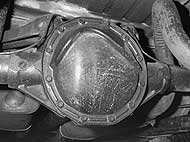
Typical Salisbury rear end found on 1964-1972 Chevelles.
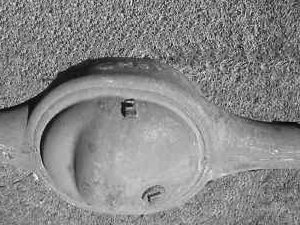
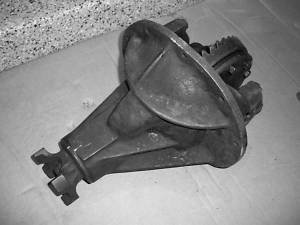
Typical Hotchkiss rear end found on full size 1955-1964 Chevrolet, Ford
and MoPar.
The Hotchkiss is generally favored over the Salisbury in racing circles due to the fairly quickly removable center section allowing a racer to have several gear ratios available to be swapped relatively quickly as the situation warrants.
* 1964-67 Chevelle rear end housings measures 53.25 inches from backing plate to backing plate and with the brake drums in place, the total width is 60.00 inches. Axle tube flange-to-flange is 54.25 inches.
{Author's note: Measuring two different 10-bolt 1967 rear ends, I found the following: Rear end #1 not in car. From backing plate-to-backing plate, 53 5/16 inches. Wheel mounting surface-to-wheel mounting surface (outside brake drum-to-brake drum) measures 60 inches. If you measure close to 60 inches and not as much as 62 inches, you can be assured the rear end is from a 1967.
Rear end #2 in car. From backing plate-to-backing
plate, 53 1/4 inches. Rear wheels were not removed to measure the outside
drum-to-drum because the inside measurements are within 1/16-inch and
I didn't feel the need to jack up the car and remove the wheels.
Note: Other sources put the total width at 60.5 inches, so measure carefully.
I did find that by using a steel tape and 'bending' it over the top
of the brake drums I came up with 60 3/16 inches.}
* 1968-72 Chevelle rear end housings measure 58.5 inches from flange to flange, and with the brake drums in place, the total width is 62.5 inches. (Note: Other sources put the total width at 61.125" to 61.25".) Axle tube flange-to-flange is 55.25 inches.
* A second measurement to check is centerline distance between spring perch seats. 1964-1967 are 35 1/16 inches between seats where 1968-1972 are 34 31/32 inches.
The 10 bolt Chevelle rear end has the 8.2" ring gear from 1964 to 1972. It wasn't until late 1972 that the 10 bolt 8.5" ring gear was used in Chevelles.
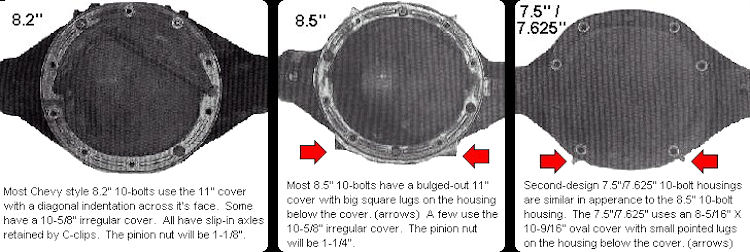
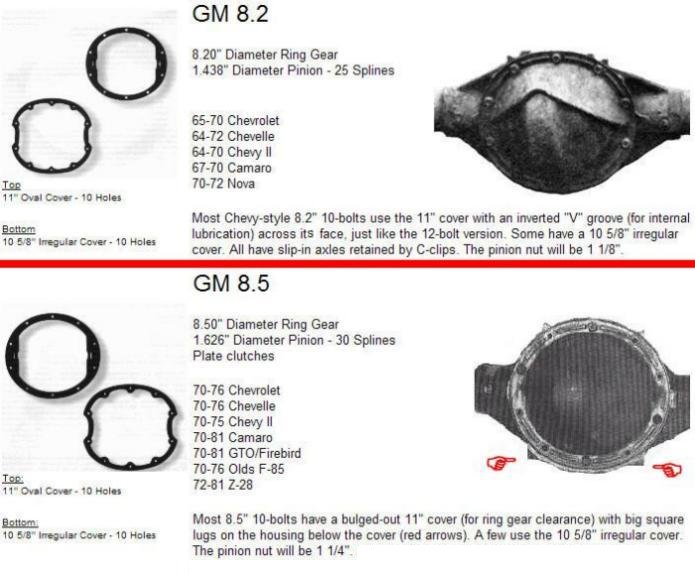
One way to tell the 8.2 from an 8.5 is by the ring gear bolts. The 8.2 rear end has 3/8" ring gear bolts with 9/16" head where the 8.5 rear end has 7/16" ring gear bolts with 3/4" head and are left-hand threads.
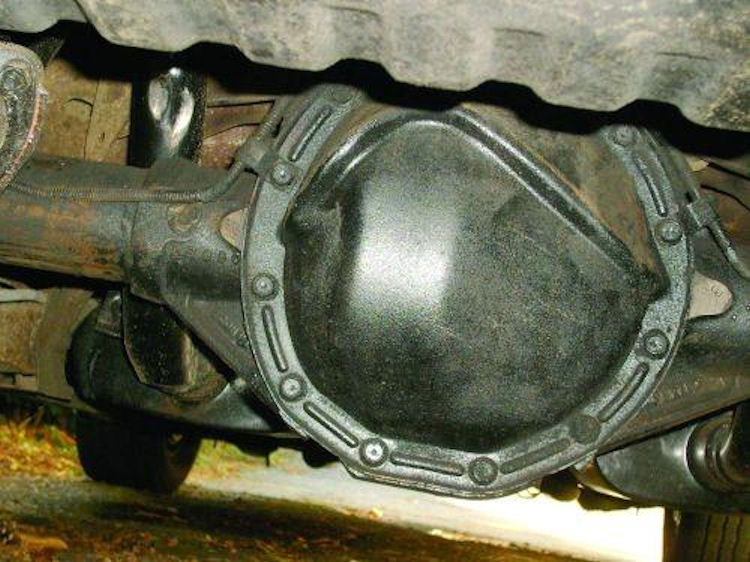
12-bolt Chevrolet
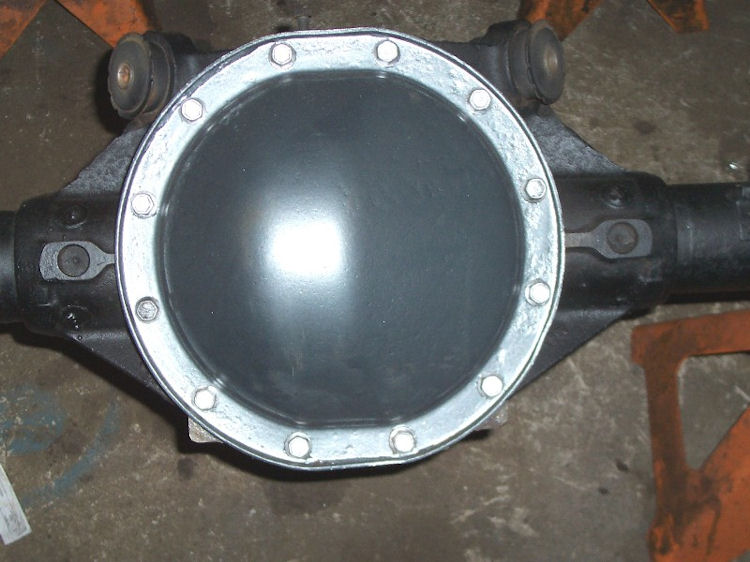
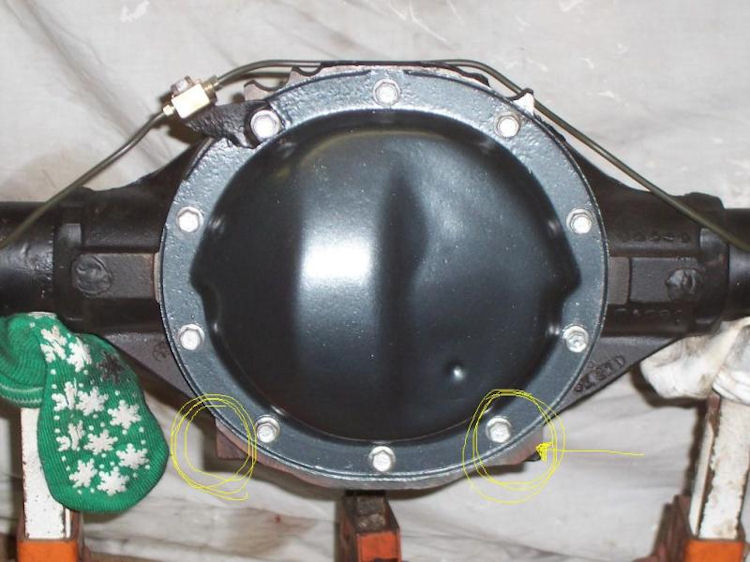
12-bolt Oldsmobile
Rear spring mounting pads differed in that 1964-66 rear ends used a flat pad with a hole drilled in the center while 1968-72 rear ends have circular spring mounting pads, which are 3/4" higher that the early flat pad.
1967 was a transition year in that A-cars might have a 1964-66 style rear end, a 1968-72 rear end (which is wider, and commonly available), or a "hybrid" rear end, which will have the 58.5" width, but with the early spring mounting pad and trailing arm brackets. (Note: For what it's worth, most 67 rear ends I've ever seen were the narrow variety and used the spring cup like 68-72 but were narrower like the 64-66 but have seen several with May/June casting dates from 1967 model year Chevelles. However, a June 1967 casting date rear end such as this might have found its way into very early 1968 model year Chevelles as well and could be the basis for the statement in the article.)
Rear upper control bushing eyes differ, and the positioning of the bushing eyes will differ. 1968-72 rear end housings will have a 3/8" forward positioning, which is farther than 1964-67 rear ends.
1964 was the only year that the rear end bushing are small, and any upper trailing arm (from any GM division) will fit 1964 rear end housings.
Upper trailing arms of 1964-67 vintage interchange, and they are 1" shorter, which will not fit into 1968-72 A-cars. 1968-72 A-cars have longer upper arms, and when switching upper arms, be careful here, in which the pinion nose angle might be affected. According to Inside '64 -- '72 A-Bodies, (Car Craft Magazine) there are 10 different rear upper control arms offered. Other characteristics include clearance bulges, common with 12-bolt differentials in A-cars, and adjustable upper arms, optioned on Oldsmobile A-cars (F-85, Cutlass). 442s had boxed upper arms, and this is a sought-after item in a restoration.
On many 1966-72 A-cars, like high-performance versions, SS396 series (66-68), Chevelles and Monte Carlos there is a frame reinforcement bracket that is standard. This stiffens the chassis, and tubular versions are available from Edelbrock and Hotchkis Performance.
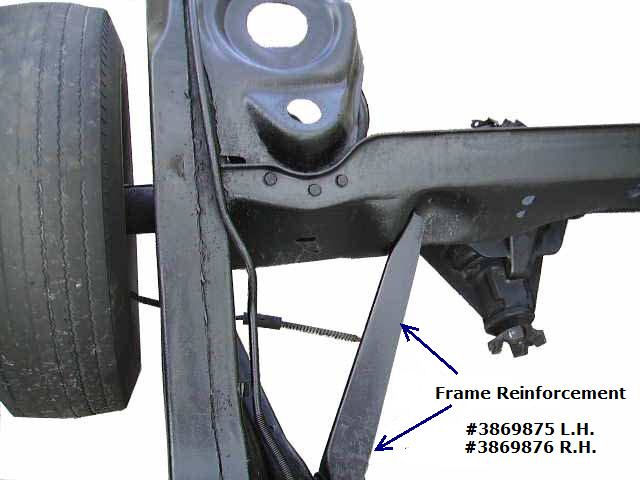
Note: the trailing arms fit either side, and this means that the left upper arm will fit on the right, and vice versa.
CONTROL ARMS (FRONT)
Most of the control arms for the 1964-72 Chevelle interchange, and
the lower control arm used for the front suspension had these distinct
features.
*One version was produced from 1964-66, and utilized 1.90" (1
5/16") diameter bushings. There are two arms used from 1967-72,
and the category includes the lower control arms with round bushings
(1.625" diameter), commonly found on 1968 (all models) or 1969-72
vehicles like Chevelle SS, Pontiac GTO, Oldsmobile 442, and the Buick
GSX. Most of the lower control arms used on the other A-cars had oval
bushings.
*The bushings described in the lower arm are located in the rear pivot area
(the TRW or MOOG manual calls this the rear control arm bushing) on
both sides of the car.
*All oval bushing arms, 1.90", and 1.625" round bushing arms (1
5/8") manufactured used a 1 3/8" (1.375") diameter front
bushing.
*The lower arms interchange as an assembly, regardless of the spring diameter
that distinguishes 1964-67 and 1968-72 front springs. You can use a
later arm on early models (1964-67), but I have not heard of a 1.90"
lower arm used on a later A-body.
Note: the lower arms may differ, in case a replacement or factory mismatch are common when locating the correct lower arm for a restoration. The only problem with oval bushings is that the existing bushing cans will have to be reused, and aftermarket companies that use solid or Del-A-Lum (a Global West product) bushings as replacements might require locating a set of round bushing lower arms, either a 1.90" or 1.625".
*Upper control arms for Chevrolet Chevelles and El Caminos use cross shafts that used bolts to secure the cup washer to the bushing. BOP A-Bodies used cross shafts with threaded ends with locknuts. Due to the possibility of frame spread, MOOG or TRW manufactures an offset control arm shaft that allows the camber angles to be corrected via OEM specs.
FRONT SPRINGS
The springs vary with application and chassis packages, but there is one thing that is important: 1968-72 A-cars have a different front spring diameter when compared to 1964-67 front springs ("Knuckle Sandwich", Hot Rod, 6/87). 1969-present springs are based on computerized data concerning chassis package and body styles, but the rates vary, depending whether a softer or stiffer ride is preferred.
Note: 1964-67 front springs can be found on 1967-69 Camaros and 1968-74 Novas, but the spring rates will differ; 1968-72 A-body front springs are used on 1968-70 BOP full size cars, but the spring rates vary.
REAR SPRINGS
The data that are true for front springs is the same for rear springs, and 1964-66 rear ends have provisions for bolting on the spring to the pad.
Another difference is that 1964-66 springs are pigtailed on one end only while 1967-72 rear ends use a cup and is flanged to hold the spring in place.